2026-11-08 · Mike Ellison
Insurance Claims For Storm Water Damage In Oklahoma City
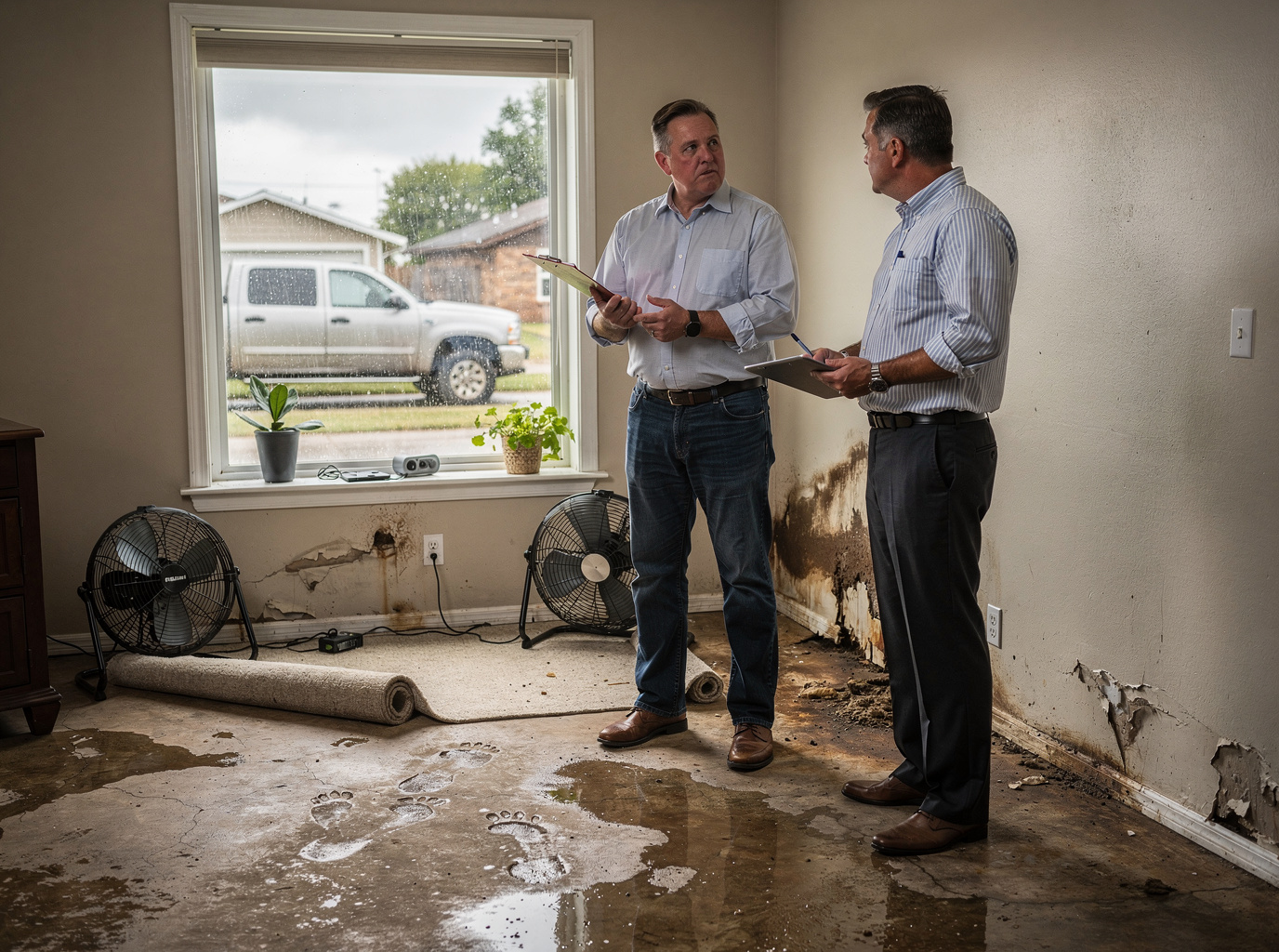
Filing an insurance claim for storm water damage in Oklahoma City starts with immediate documentation of affected areas like Bricktown or Midtown and prompt notification to your carrier within the first 24 to 48 hours to protect coverage eligibility.
Common Storm-Related Water Damage in Oklahoma City
Severe thunderstorms hit Oklahoma County regularly during warm humid summers, sending heavy runoff into older brick homes in Automobile Alley and Deep Deuce while saturating crawl spaces in The Village and Warr Acres. Cold winters bring pipe bursts that affect stock in Capitol Hill and Stockyards City where many residences date to the 1950s and 1960s with original plumbing. These patterns create distinct claim scenarios: roof leaks from hail in Moore and Midwest City often involve attic insulation saturation, while flash flooding near the Oklahoma State Capitol or Myriad Botanical Gardens can push water into basements. Water Damage After Oklahoma City Spring Storms details how spring events differ from winter incidents covered in Handling Frozen Pipe Bursts During Oklahoma Winters. Adjusters routinely inspect for secondary mold growth accelerated by local humidity levels above 60 percent.
Steps to File Your Insurance Claim
Begin by photographing every affected room, appliance, and structural element before any cleanup. Record water depth in inches and note the exact time the storm passed over neighborhoods such as Bethany or Del City. Contact your insurer the same day and request a claim number in writing. Prepare a detailed inventory listing each item, its age, and replacement cost using current Oklahoma City retail prices. Schedule the adjuster visit during daylight hours when natural light reveals water lines on drywall. Follow up in writing within three days if no inspection is set. Keep all receipts for temporary measures like dehumidifier rentals that prevent further loss.
Challenges Specific to Oklahoma County Homes
Many homes in Nichols Hills and Edmond sit on clay-heavy soils that expand and contract, causing foundation cracks that complicate water intrusion claims after storms near Will Rogers World Airport. Insurance policies often exclude flood damage from the Canadian River watershed, requiring separate NFIP policies for properties in low-lying zones of Norman or Shawnee. Older roofs in Midwest City frequently show wear from repeated hail cycles, leading adjusters to debate actual cash value versus replacement cost. Document pre-existing conditions with dated photos from the prior season to avoid disputes. Terrain slopes in areas like Choctaw direct water toward garages, creating hidden damage under concrete slabs that requires moisture meters for detection.
Working with Your Insurer Effectively
Provide the adjuster with a written timeline of the storm event and any prior mitigation attempts. Request copies of all inspection reports and photographs taken on site. When disputes arise over scope, ask for a second opinion from a qualified local contractor familiar with Oklahoma County building codes. Track every phone call and email in a dedicated folder. If the initial offer falls short of documented repairs, submit a supplemental claim with additional evidence such as engineer reports on soil saturation. Policies typically require proof of loss within 60 to 90 days, so maintain organized records from day one.
When Professional Restoration Helps the Claim
Engaging a restoration team early can produce the moisture mapping and drying logs that strengthen a claim file. Technicians serving Moore and surrounding cities use thermal imaging to locate hidden water behind walls in homes built before 1980. This documentation often supports requests for full drywall replacement rather than surface drying only. Water Damage Restoration teams based at 12220 N MacArthur Blvd Ste F #60, Oklahoma City, OK 73162 operate Mon–Fri 8am–6pm and Sat 9am–2pm to coordinate with adjuster schedules. Their reports help demonstrate that mitigation began within industry timelines, reducing the chance of coverage denial for preventable secondary damage.